Showing posts with label Native plants. Show all posts

Wednesday, July 1, 2026

Perennial Peanut is not "Florida-Friendly"

In general, I agree with the "9 Florida-Friendly Principles: 1) Right Plant, Right Place; 2) Water Efficiently; 3) Fertilize Appropriately; 4) Mulch; 5) Attract Wildlife; 6) Manage Yard Pests Responsibly; 7) Recycle; 8) Reduce Storm Water Runoff; and 9) Protect the Waterfront. The overall goal is to reduce nonpoint source pollution through proper fertilization, irrigation, and pesticide use on residential and commercial landscapes."

BUT, over the years I have been critical of the "Florida-Friendly" plant list since only about half of the named plants are actually native to Florida. As a botanist and naturalist, I think that the percentage of Florida natives should be 75% or higher. In most cases, though, the non-native plants are "okay" even though they don't support native pollinators or native birds as well as natives do. 

One exception, in my opinion, is the very aggressive perennial peanut or grassnut (Arachis glabrata), which is in the bean family (Fabaceae) and like other members of this family they fix nitrogen* with the aid of their symbiotic Rhizobium bacteria, so they can grow well in poor soil. 

Monday, June 1, 2026

Coonties: Florida's only native cycad & only Atala butterfly host plant

Coontie is a popular native for parking lots
like this hospital lot in Jacksonville, because it
doesn't need trimming to maintain this height.

Coontie (Zamia integrifolia), a beautiful & unique plant native to most of Florida & some Caribbean islands, has an interesting history of over exploitation & the near extinction of the Atala butterfly (Eumaeus atalathat depends on this plant as its larval food source. Today, coontie is widely planted in all of Florida because it's attractive, drought-tolerant, salt-spray tolerant, plus it grows in poor soil & does not need trimming. 

Coontie is a Cycad

Cycads are ancient plants that have a fossil record that shows that they have not changed much in the last 68 million years. They are gymnosperms, which means naked seed. (Pines are also gymnosperms.) Angiosperms, the flowering plants with their enclosed ovaries and their pollinators such as bees & butterflies developed much later. 

Cycads bear pollen and ovaries in fleshy cone-like structures at ground level on separate male and female plants. They are pollinated by beetles and the coonties use heat in the cones at different times to attract the beetles to the male cones and then to travel to the heat in the female cones. This is called thermogenesis.

Sunday, March 1, 2026

The Birds are NOT OK

What is the birds-eye view of your yard
your community?

Birds Aren’t Just Declining.
They’re Declining Faster!

Scientists studying data collected for more than three decades found accelerating losses. The steepest losses in the study, from 1987 to 2021, were seen in Florida, Texas, Louisiana and Arizona. This research offers clues about the causes. Here are links to a gift article in the NY Times that looks at this research and to a WashingtonPost gift article, which both cite the same study.

This research showed a correlation with increased use of pesticides in agricultural regions, but it also linked back to an older study showing that cats cause huge harm to our birds. I wrote about that as well and how controversial this is in this article.

This Red-shouldered Hawk provided its
opinion on how humans treat birds.


BUT...

Whatever the causes for their decline, we are NOT helpless and, as Joan Baez stated, "Action is the antidote to despair."

There are many actions we can take to make our yards and our communities more bird friendly. I've covered this topic from several different angles over the years, so I've gathered some of the most relevant articles here to make it easier for people to up their game at this critical time. The birds need us to act now more than ever.

Sunday, February 1, 2026

Alders Fix Nitrogen

Smooth alder or hazel alder (Alnus serrulata)
Photos by Georgia Native Plant Society

Hazel alder or smooth alder (Alnus serrulata) is blooming now with its showy yellow catkins. The woody female flower heads look like little pine cones. It's a tall multi-stemmed shrub to small tree in the birch family (Betulaceae).

This alder is native to freshwater and brackish water wetlands from Texas to Maine and into North Florida. It plays an important role in these wetlands because it fixes nitrogen in its root nodules using Frankia, a genus of anaerobic, filamentous bacteria in the Actinomycetes order. 

When soil is wet all or most of the time it is anaerobic (without air) and in these conditions, the normal soil microbes cannot survive and most plants cannot obtain enough nutrients from this soil. The alders' symbiotic relationship with this weird bacteria provides the nutrients they need to survive and they do so without much competition from other plants.

Tuesday, July 1, 2025

The importance of Oaks

An oak branch in the white oak group

Oaks

Most oaks (Quercus spp.) are hardwood trees and have been used by people over the ages for building structures and boats. The oak fruit is a true nut with a hard shell and a cap, called the cupule, which protects the kernel. The kernel, which consists of two fatty seed leaves, called cotyledons, which surround a small embryo. This is an important food for wildlife and for early humans once they learned how to remove the bitter tannins.

Oaks are divided into two major groups. The white oaks are those with rounded lobes on their leaves and the acorns mature within one season and are less bitter. The red oaks generally have pointed lobes or sharp lobes on their leaves and their acorns stay on the trees for two seasons, so their acorns have more tannins and are therefore more bitter.

Thursday, May 1, 2025

Sweetbay magnolia, a lovely tree with highly scented flowers

The beautiful sweetbay magnolia flower
is pollinated by beetles.

The sweetbay magnolia (Magnolia virginiana) is lovely, mostly evergreen medium-sized tree with leaves that are dark green on top with silver undersides. It has beautiful, fragrant flowers and bright red fruits. It is tolerant of flooding, even with brackish water. It grows best in acid soil in full sun or partial shade.

It provides excellent habitat for wildlife. While it's pollinated by beetles, a wide variety of birds and other wildlife consume the fruits, plus it's the larval food source for several butterflies including the Spicebush Swallowtail (Papilio troilus) and the Eastern Tiger Swallowtail (Papilo glaucus). It should be planted much more often.

Monday, March 3, 2025

Miami's Underline Park

The Underline is an impressive
& well-used urban park located
under the Metro Rail in Miami.

Taking its inspiration from the High Line Park in New York City and The Lurie Garden in Chicago, The Friends of The Underline non-profit organization formed in 2013. The Underline is basically a multi-use path with parks, recreational spaces, playgrounds, plantings, and stormwater infrastructure. It's expected to extend to its full 10-mile distance by 2026.

These gardens feature untrimmed native plants that attract and feed insects and birds. This is different than traditional formal gardens where everything is tightly trimmed and exotic plants are chosen for their beauty and because they are not favored by the local insects. This style is left over from British and European upper class expectations where those who owned grand houses and estates favored those highly maintained gardens to show how wealthy they were.

Sunday, December 1, 2024

It's Time to Think Globally, but Act Locally.

www.climatewiselandscaping.com 

Climate change is real!

We are seeing its effects on the weather with more frequent, stronger and slower-moving hurricanes, more severe droughts, more fires, and rising sea levels. But Sue Reed and I did not debate the reality of climate change or what has caused these rapid changes when we wrote our award-winning book, "Climate-Wise Landscaping: Practical Actions for a Sustainable Future." Instead we said, "Let's roll up our sleeves and get to work."

The same thing has happened in the writing of my 7th book with the working title "Living Shorelines for Florida: A Practical Guide for Building Resilience," which will be published in 2025. I and my three coauthors did not debate sea level rise or discuss what the causes might be, but plans for dealing with rising sea levels are included in our various actions and designs for more resilient shorelines.

So what actions can we take and will it make any difference?

While actions we take in our yards and in our communities may seem insignificant, there are many millions of homeowners and communities, and together, we are a powerful force. What follows are some ideas and links to resources for some of the most significant actions. 

Friday, November 1, 2024

Chives and meadow garlic: two members of the onion family

Chives and meadow garlic together in my herb garden in 2010.

Chives: (Allium schoenoprasum) a classic herb that produces edible leaves, bulbs, and flowers. A perennial plant, chives is widespread in nature across much of Eurasia and North America. It is the only species of Allium native to both the New and the Old Worlds.

Chives are a commonly used herb and vegetable with a variety of culinary uses, but mostly for garnish, because with their hollow stems they fall apart during cooking. They are also used to repel insects, but chives are not native to Florida. 

Meadow Garlic: (Allium canadense) a rarely used perennial herb native to most of eastern North America. It also produces edible leaves, bulbs, and flowers. It's leaves are solid which means that this plant does withstand cooking. As a crop, it has a few characteristics that are a bit different. It dies back for the summer, so leaves are not available for harvesting then, but you could dig the bulbs to use if you know where they are. They sprout again from their bulbs in mid fall, bloom in the spring, and die back after blooming. They produce several bulblets in each flower head, which readily grow where they fall, so this crop spreads rapidly once it's established.

When they are available from late fall through to spring, I use the leaves for both salads and cooking in soups, omelets, stir frys and more. Because the leaves are solid they are more useful in the kitchen than the chives. The taste is similar to, but not the same as chives or garlic chives (Allium tuberosum) and it has a bit of spicyness or heat. All three have an onion overtone, and of the three, chives is the most bland. The meadow garlic flowers also have more flavor than the chives flowers. 

Sunday, September 1, 2024

Grapes (Vitis spp.)

A muscadine grape (Vitis rotundifolia 'Alachua')
Credit: Ali Sarkhosh, UF/IFAS

Florida's grapes

There are six species of grapes that are native to Florida, while some have small ranges, grapes are found in all parts of the state. 

- Summer grape (Vitis aestivalis)
- Florida grape (Vitis cinerea var. floridana)
- Catbird grape (Vitis palmata)
- Muscadine (Vitis rotundifolia)
- Calloose grape (Vitis shuttleworthii)
- Frost grape (Vitis vulpina)

The muscadine grape is native to all of Florida and from Delaware to eastern Texas. This is grown as a sustainable crop in Florida and has been bred so that this normally dioecious plant (with separate male and female plants) is self-fertile or monoecious.

Monday, July 1, 2024

Winged sumac, a useful understory shrub

A small winged sumac in bloom, which
attracts a wide variety of pollinators.

Winged Sumac (Rhus copallinum) is a deciduous, compact, densely growing, colonizing shrub that is native to all of Florida and the eastern half of North America. It can grow to 10 to 25 feet tall and nearly as wide, although the ones in our yard are much smaller than that. They will grow in a wide variety of situations, but they do best in full sun or partial shade and require good drainage. 

This plant could be used in a hedge row with a variety of other shrubs and is a good choice for naturalizing at the edge between wooded and open areas. Keep in mind that it will be bare for a few months in the winter. It can spread quite some distance via rhizomes or underground roots, so keep that in mind when choosing planting sites.

Saturday, June 1, 2024

Shrubs in the landscape

A newly renovated house in our neighborhood with its
newly-installed curb-appeal shrubs where there were none.

Shrubs as the default foundation plantings

Shrubs are easy for the builders to install and they give the landscape a "finished" and the expected look for a house.

Here's a house in our neighborhood that recently went on the market after extensive interior renovations according to its online listing. But what bothered me was that they removed two mature trees on the west side of the house, which cooled the area especially in the afternoon, removed the awnings on the windows, and then installed a row of useless, sprawling shrubs along the foundation. One of the trees may have been too close to the house, but the other one was fine. 

This was in 2022 when their azaleas were blooming. I was not
focused on the house, but the thickets.

I had taken a photo of this house in 2022 when their Japanese azaleas (Rhododendron japonicum), which are planted around some trees, were in bloom to include in my article, Habitat Gardening. The tree in the foreground is an old redcedar (Juniperus virginiana) next to the road, which is still there.

So the real problem with foundation shrubs is that they usually outgrow their spaces, some sooner than others. Sometimes it's just that they grow too tall, but other shrubs with aggressive spreading roots could also damage the building's foundation. 

Monday, April 1, 2024

White Wild Indigo

It planted itself in a location that's too close to
 the sidewalk, but I'll leave it there since they
don't transplant well.

White Wild Indigo: A beautiful perennial pollinator plant

White wild indigo (Baptisia alba) is a plant worth including in your pollinator garden. It is pollinated by large bees including bumblebees and carpenter bees. It's also a host plant for Wild indigo duskywing and Zarucco duskywing butterflies. The fruits are eaten by birds. While it's an important plant in the local ecosystem, it's toxic to humans and livestock.

It is best propagated from scarified seed. Once established, plants should not be moved, since they have a long tap root. They take several years to reach maturity but are long-lived, and often grows 2-3 feet tall, frequently wider than it is tall. It produces showy white flowers March-May, but is dormant in winter. Use it as a small shrub or background plant in a border located in full sun to partial shade. 

It is a tri-foliate legume and can thrive in a variety of poor soils including acidic to neutral clay, loam, or sand. It naturally occurs in a sandhill environment, so established plants can tolerate some drought, but never flooding. 

Thursday, November 2, 2023

Florida's goldenrods

Goldenrods do Not cause allergies

The insect-pollinated goldenrods (Solidago spp.) with their beautiful flowers have erroneously been blamed for fall allergy season when it's the wind-pollinated ragweed (Ambrosia spp.) with the unnoticeable green flowers that are filling the air with pollen when the goldenrods are blooming. The ragweeds do not need to put any energy into creating beautiful flowers or sweet nectar because the wind will blow anyway. As I understand it, some allergy doctors test people to see if they are allergic to goldenrod pollen even though that pollen is too heavy and sticky to float in the air and there is zero chance of its getting into anyone's nose. 

A swallowtail butterfly is pale in comparison to
the very yellow goldenrod.
Ragweed, the source of the air-borne pollen that gives people hay fever.

Sunday, October 1, 2023

Why talking about native plant landscapes is so important

Consumers are presented with this array of mostly
nonnative plants in full bloom to plant so their yards can
decorated with plants at peak bloom all the time.

Where are the native plants?

New homeowners and beginning gardeners find displays similar to this photo that I took at a big box store a few years ago. It's filled with mostly nonnative annuals in full bloom. Each tray is not too expensive, but after they fade in a couple of months, people are expected to come back to replace them with the next set. 

Examples in garden magazines and gardening TV shows with their instant landscapes imply that garden installations are events, and not ongoing projects that develop over the years.

Friday, September 1, 2023

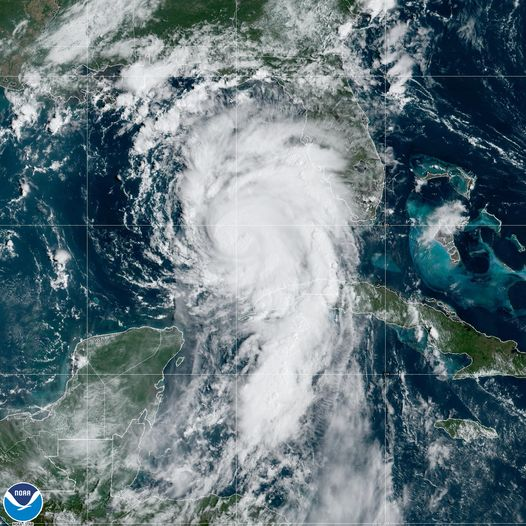
Hurricane-scaping in Florida

Hurricane Idalia 2023

Florida's hurricane season is from June 1 to November 30. These five months are also the wet season here when we receive up to 70% of our annual rainfall. Our hot wet summers make it difficult to grow some vegetables like sweet basiltomatoes and most members of the squash family, but growing crops is not the topic for this post.

As I'm writing this, Hurricane Idalia is pummeling the west coast of Florida. Florida is subjected to more hurricane activity than other states because the 1,350 mile-long coastline, which is surrounded by warm waters. When sea surface temperatures are above 82˚F, this warm water sustains and intensifies tropical storms that may strengthen into hurricanes. This year the Atlantic Ocean temperatures reached as high as 101˚F just off the east coast of Florida. So it's not surprising that we have been struck by a Category 4 hurricane.

Tuesday, August 1, 2023

Starry rosinweed is a star in Florida yards

Starry rosinweed is a star in your garden not only
for its beauty and long blooming cycle, but also because
of the wide variety of pollinators that it attracts.

Starry Rosinweed (Silphium asteriscus) is a member of the aster or daisy family, Asteraceae and is a wonderful choice for Florida's wildflower meadows and for pollinator gardens. It's a beautiful, tall, long-lived, drought tolerant, easy-to-care-for wildflower. (See below for more information on how it behaves in gardens and meadows.)

Botanically, the starry rosinweed is an outlier in the aster family. Yes, its flower head has the typical arrangement of disk florets in the center surrounded by showy ray florets that each have one outsized petal. 

In most aster family plants with this typical flower head arrangement such as sunflowers, only the tiny, cylindrical disk florets in the center produce fruits or seeds, while the petal-like ray florets around the outside of the center are sterile and produce no fruits. The starry rosinweed is exactly the opposite with its ray florets producing fruits and the disk florets being sterile.

Monday, May 1, 2023

Hibiscus: Plants with the most beautiful flowers

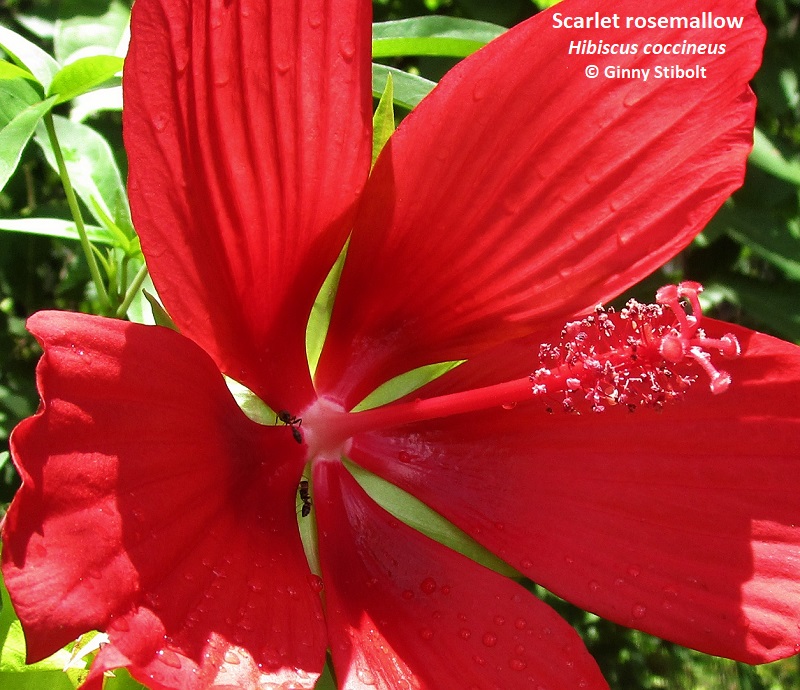
A scarlet rosemallow (Muenchhusia coccineus):
 a Florida native

There are 432 Hibiscus species that are found worldwide, and with their beautiful flowers, many are grown in gardens and some are even used as crops. In general, the flowers are large and showy. (Updatre in June 2026: Some of Florida's native Hibiscus species are now Muenchhus, while some others are Sabdariffa.)

For example, see the scarlet rosemallow in the lead photo. Here there are five green sepals subtending five large red petals. The pistil, the female reproductive part of a plant, is attached to the center of the flower. The pistil is made up of a five-chambered ovary where seeds develop, the style that is a long tube between the ovary and five round stigmas where the pollen is absorbed. A stamen, the male reproductive structure, consists of the anther that holds the pollen, and a stalk called the filament. In hibiscus flowers, the filaments fuse into a tube that surrounds the style. Numerous anthers stick out from the filaments below the five stigmas at the top of the style. The prominent pistil with all those anthers is one reason the hibiscus flowers are so showy.

Saturday, April 1, 2023

Netted chain ferns

Netted chain fern: sterile fronds.

The netted chain fern (Woodwardia areolata) is native to eastern North America including most of Florida. It spreads via rhizomes and acts as a ground cover in partially shaded areas with some moisture. 

Leaves or fronds are dimorphic with the sterile leaves being flat and relatively broad for a fern, while the fertile fronds (those bearing the spores in structures called sori. (Sorus is the singular.)) are taller and have very little green leafy area. For this fern, sori are oblong and are arranged in neat lines, this is the characteristic that gives the chain ferns their name. In North Florida and in more northerly areas in its range, the green sterile fronds die back in the winter, while the fertile fronds persist through the winter.

Sunday, January 1, 2023

Red cedar: an important habitat tree

A female red cedar with fruit.

Red cedar (Juniperus virginiana) is medium-sized, dioecious evergreen conifer with female trees that bear waxy, berry-like cones, which many types of birds will eat as the weather grows colder.

While most botanists agree that there is one species of red cedar that's native to most of eastern North America, the old precedent recognized coastal red cedar (J. silicicola) and eastern red cedar (J. virginiana) a bit inland, with a big range from Texas to southern Ontario. This old protocol meant that except for the northern border of Florida's Panhandle, the red cedars native to Florida were the coastal species.

Red cedar is in the cypress family (Cupressaceae), which has world-wide distribution--except for Antarctica. Other members of this family found in Florida are two cypresses: pond cypress (Taxodium ascendens) and bald cypress (T. distichum); Atlantic white cedar (Chamaecyparis thyoides); plus the non-natives: oriental arborvitae (Platycladus orientalis) and white cypress-pine (Callitris glaucophylla).