Showing posts with label Climate-Wise Landscaping. Show all posts

Monday, December 1, 2025

Sticks as Mulch

Using sticks as mulch reduces weed growth.

Mulches & mulching

Over the years, I've written about mulching and mulches in my seven books and in various articles: 
- Pine needle mulch (the most read post on this blog)
- Wood chip mulch 
- Too much mulch
- Rock-scaping & more.

But for the past several years, I've also been using sticks as mulch near buildings to reduce weed infestations. Unlike other mulching materials, there's a lot of air or space between the sticks, so there's nothing there for seedlings. Eventually, some weeds that spread via rhizomes or stolons, such as fog fruit (Phyla nodiflora) or Florida betony (Stachys floridana) work their way into the space, but very few seed-spread weeds. 

This type of mulching works well for our yard because have lots of trees. A good time to create a stick-mulch area is after a high-wind event. Yes, we also have several stick piles to create habitat for small birds and various insects, so I don't usually raid those piles for sticks for mulching. 

Wednesday, October 1, 2025

Food-from-scraps

I prepare a whole row for come-again crops.
So far this year I have two starts: celery &
romaine lettuce.

Instead of throwing away or composting the bases of store-bought celery, cabbages, leaf lettuces, and other cool-weather crops, you can grow new food. The base must include a root-bearing zone. This is a fun project for kids, because you see results in just a few days.

As, I prepare wide rows for my fall and winter crops, I also prepare a food-from-scraps row. It's usually a fairly narrow row about a foot wide. First, I bury kitchen scraps and compost down the middle of the row and leave a shallow swale on the surface so that water stays in place and soaks into the soil. Then I mulch the row with pine needles. Here's link to my wide-row article for more detail & photos.

So far this year, I have two starts in this row, celery and romaine lettuce. Over the years, I have had the best success with celery, so much so, that I never plant it as a crop from seeds or plants. Cabbage has also been quite reliable and I end up harvesting the come-again cabbage leaves well before my regular cabbage crops mature.

Tuesday, July 1, 2025

The importance of Oaks

An oak branch in the white oak group

Oaks

Most oaks (Quercus spp.) are hardwood trees and have been used by people over the ages for building structures and boats. The oak fruit is a true nut with a hard shell and a cap, called the cupule, which protects the kernel. The kernel, which consists of two fatty seed leaves, called cotyledons, which surround a small embryo. This is an important food for wildlife and for early humans once they learned how to remove the bitter tannins.

Oaks are divided into two major groups. The white oaks are those with rounded lobes on their leaves and the acorns mature within one season and are less bitter. The red oaks generally have pointed lobes or sharp lobes on their leaves and their acorns stay on the trees for two seasons, so their acorns have more tannins and are therefore more bitter.

Thursday, May 1, 2025

Sweetbay magnolia, a lovely tree with highly scented flowers

The beautiful sweetbay magnolia flower
is pollinated by beetles.

The sweetbay magnolia (Magnolia virginiana) is lovely, mostly evergreen medium-sized tree with leaves that are dark green on top with silver undersides. It has beautiful, fragrant flowers and bright red fruits. It is tolerant of flooding, even with brackish water. It grows best in acid soil in full sun or partial shade.

It provides excellent habitat for wildlife. While it's pollinated by beetles, a wide variety of birds and other wildlife consume the fruits, plus it's the larval food source for several butterflies including the Spicebush Swallowtail (Papilio troilus) and the Eastern Tiger Swallowtail (Papilo glaucus). It should be planted much more often.

Friday, April 4, 2025

Rain gardens in Florida

Stormwater carries pollutants that
end up in our waterways.

Why do we need rain gardens?

Sequestering stormwater reduces pollution of our waterways and of our aquifers. This is because stormwater runoff carries: fertilizers, sediments, plant matter, manures, pesticides, herbicides, salts, oils and other vehicular drippage. 

Pollution that originates from numerous, diffuse sources, such as our yards is called Non-Point-Source (NPS) and the Environmental Protection Agency (EPA) estimates that NPS pollution is the largest threat to our waterways. But, we can reduce NPS pollution from our yards and from our communities by holding or sequestering more rainwater by installing rain barrels and by building rain gardens.

Monday, March 3, 2025

Miami's Underline Park

The Underline is an impressive
& well-used urban park located
under the Metro Rail in Miami.

Taking its inspiration from the High Line Park in New York City and The Lurie Garden in Chicago, The Friends of The Underline non-profit organization formed in 2013. The Underline is basically a multi-use path with parks, recreational spaces, playgrounds, plantings, and stormwater infrastructure. It's expected to extend to its full 10-mile distance by 2026.

These gardens feature untrimmed native plants that attract and feed insects and birds. This is different than traditional formal gardens where everything is tightly trimmed and exotic plants are chosen for their beauty and because they are not favored by the local insects. This style is left over from British and European upper class expectations where those who owned grand houses and estates favored those highly maintained gardens to show how wealthy they were.

Wednesday, January 1, 2025

How palms work

A cabbage palm tree (Sabal palmetto) silhouetted
by a sunrise on the St. Johns River.

Palms decorate tropical and subtropical regions of the World

Palms are monocots. Angiosperms or true flowering plants are divided into two major groups—monocots and dicots, which have various differences, but are named for the number of seed leaves or cotyledons they have. 

Monocots also include grasses, orchids, gingers, bananas, and bamboo. Also, most of the bulbs including onions, garlic, lilies, tulips, and more, but probably most important characteristic for our discussion on palms, there is no real wood with annual rings. The vascular tissue (the phloem and xylem) in monocots is arranged in bundles throughout the stem. In a dicot, they occur in the cambium layer just under or inside the bark around the plant stem. It is the new set of xylem and phloem cells that are produced each year which form the annual rings that produce the wood in true trees.

Sunday, December 1, 2024

It's Time to Think Globally, but Act Locally.

www.climatewiselandscaping.com 

Climate change is real!

We are seeing its effects on the weather with more frequent, stronger and slower-moving hurricanes, more severe droughts, more fires, and rising sea levels. But Sue Reed and I did not debate the reality of climate change or what has caused these rapid changes when we wrote our award-winning book, "Climate-Wise Landscaping: Practical Actions for a Sustainable Future." Instead we said, "Let's roll up our sleeves and get to work."

The same thing has happened in the writing of my 7th book with the working title "Living Shorelines for Florida: A Practical Guide for Building Resilience," which will be published in 2025. I and my three coauthors did not debate sea level rise or discuss what the causes might be, but plans for dealing with rising sea levels are included in our various actions and designs for more resilient shorelines.

So what actions can we take and will it make any difference?

While actions we take in our yards and in our communities may seem insignificant, there are many millions of homeowners and communities, and together, we are a powerful force. What follows are some ideas and links to resources for some of the most significant actions. 

Sunday, October 6, 2024

Two weeds: one native and one nonnative

While the sharp, hard spikes
 on the seeds hurt our feet and
embed themselves in the
lawnmower tires, this is their
method of dispersal. 

Sand spurs

Six species of sand spurs or sandburs (Cenchrus spp.) are native to Florida. They are true grasses in the grass family, Poaceae.  While native plants are highly recommended for sustainable, climate-wise landscapes, these are not desirable because of the hard and very sharp prickles that cover their seeds. 

They have volunteered in our yard only out by the road where the other plants in our freedom lawn are a bit more sparse and where the neighborhood dog walkers visit on a regular basis. So even though I have cleared out this population of annual plants before, new ones can get a start out there when dogs bring more seeds from elsewhere.

Thursday, August 1, 2024

Snags, stumps, and logs provide habitat

Three birds perched on a snag. A ball moss
(Tillandsia recurvata) also lives on this snag.

Dead standing trees are snags. If a snag is located so that it will not hurt people or damage property, leave it standing for its wildlife value. Snags are highly productive sources of habitat that work well in both natural areas and designed landscapes.

Tree basics

The vast majority of organisms on our planet depend upon the life-giving process of photosynthesis. Plants and other organisms with chlorophyll combine carbon dioxide from the air and water with energy from the sun to form sugars and oxygen gas. The plant can then combine the sugars to form starches, fats, enzymes, or whatever the plant needs. 

Photosynthesis: 6CO2 + 6H2O >> C6H12O6 + 6O2

Then most living organisms (plants, animals, fungi, bacteria) take in oxygen and digest the sugars in one form or another to gain energy for life through respiration, a process the equal and opposite of photosynthesis. 

Respiration: C6H12O6 + 6O2  >> 6CO2 + 6H2O 

Since trees normally live for many years, they sequester carbon in their wood and root tissues as long as they live, while the flowers, fruits and leaves store carbon only temporarily until they are eaten or decompose. Much of this decomposing plant matter ends up in the soil. But when a tree dies, the wood begins to break down as bacteria, fungi, insects, and other organisms begin to absorb the wood tissue so they can gain energy for life. As the wood deteriorates, then birds and other larger animals can consume the decomposers and so the carbon-based sugars stored in the wood moves up the food chain. The organisms store the sugars created during photosynthesis, but as they respire and when they die, the carbon is released into the atmosphere.

One note here on carbon sequestration: The soil sequesters 3 to 4 times as much carbon as all the terrestrial plants, including rain forests. Peat is especially important since it can sequester carbon for thousands of years. This is important because the more carbon sequestered means less carbon dioxide, our most abundant greenhouse gas, in the atmosphere and that is good for our only planet. (Read my article on peat moss.)

Monday, July 1, 2024

Winged sumac, a useful understory shrub

A small winged sumac in bloom, which
attracts a wide variety of pollinators.

Winged Sumac (Rhus copallinum) is a deciduous, compact, densely growing, colonizing shrub that is native to all of Florida and the eastern half of North America. It can grow to 10 to 25 feet tall and nearly as wide, although the ones in our yard are much smaller than that. They will grow in a wide variety of situations, but they do best in full sun or partial shade and require good drainage. 

This plant could be used in a hedge row with a variety of other shrubs and is a good choice for naturalizing at the edge between wooded and open areas. Keep in mind that it will be bare for a few months in the winter. It can spread quite some distance via rhizomes or underground roots, so keep that in mind when choosing planting sites.

Saturday, June 1, 2024

Shrubs in the landscape

A newly renovated house in our neighborhood with its
newly-installed curb-appeal shrubs where there were none.

Shrubs as the default foundation plantings

Shrubs are easy for the builders to install and they give the landscape a "finished" and the expected look for a house.

Here's a house in our neighborhood that recently went on the market after extensive interior renovations according to its online listing. But what bothered me was that they removed two mature trees on the west side of the house, which cooled the area especially in the afternoon, removed the awnings on the windows, and then installed a row of useless, sprawling shrubs along the foundation. One of the trees may have been too close to the house, but the other one was fine. 

This was in 2022 when their azaleas were blooming. I was not
focused on the house, but the thickets.

I had taken a photo of this house in 2022 when their Japanese azaleas (Rhododendron japonicum), which are planted around some trees, were in bloom to include in my article, Habitat Gardening. The tree in the foreground is an old redcedar (Juniperus virginiana) next to the road, which is still there.

So the real problem with foundation shrubs is that they usually outgrow their spaces, some sooner than others. Sometimes it's just that they grow too tall, but other shrubs with aggressive spreading roots could also damage the building's foundation. 

Wednesday, May 1, 2024

Composting in place: Part 2

I scored a huge load of wood chips the
other day--mostly pines (with needles)
& oaks. This close to our 30th
load since 2004.

I wrote "Enrich soil for crops by composting in-place" back in 2019 about how I build soil and our raised beds for growing our vegetables, which includes the whole process from building the beds (without hard sides) to trench composting to add additional organic materials to the soil. While no gardener can claim 100% success rate in growing veggies, over all I've been quite successful over the years with these wide-row beds. Plus, this article has been one of the most visited.

This article is a follow-up to that piece and it's also centered around our vegetable beds, but this time I cover what's between the beds and how beautifully rich soil is also created there.

A new arborist chip dump

On our morning walk, I saw a tree company getting ready to work a couple of streets over from ours. I walked back over there and asked for their load of chips, they were happy to do so. They were just getting ready to drive their truck to the dump, as I walked the 1/2 mile back home, the truck passed me and I explained where to dump them, but the driver already knew where to go because he'd dumped loads there before. 

Friday, September 1, 2023

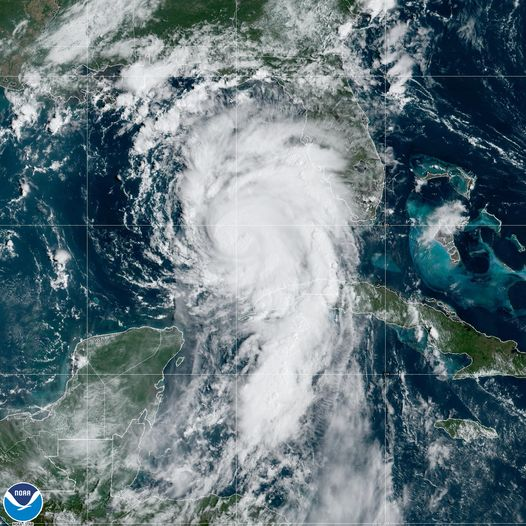
Hurricane-scaping in Florida

Hurricane Idalia 2023

Florida's hurricane season is from June 1 to November 30. These five months are also the wet season here when we receive up to 70% of our annual rainfall. Our hot wet summers make it difficult to grow some vegetables like sweet basiltomatoes and most members of the squash family, but growing crops is not the topic for this post.

As I'm writing this, Hurricane Idalia is pummeling the west coast of Florida. Florida is subjected to more hurricane activity than other states because the 1,350 mile-long coastline, which is surrounded by warm waters. When sea surface temperatures are above 82˚F, this warm water sustains and intensifies tropical storms that may strengthen into hurricanes. This year the Atlantic Ocean temperatures reached as high as 101˚F just off the east coast of Florida. So it's not surprising that we have been struck by a Category 4 hurricane.

Tuesday, October 4, 2022

Habitat gardening

In natural areas, the soil ecosystem supports the plants,
which support the insects, which in turn support
the birds and other wildlife.

Florida's default landscapes

Most yards in Florida consist of highly maintained monoculture lawns, a few stand-alone trees, and a fringe of foundation plants around the buildings. This is the opposite of habitat gardening because typical Florida lawn care includes regular landscape-wide applications of insecticides, herbicides, fungicides and other poisons. Then since these pesticides are not good for the turfgrass, synthetic fertilizer is applied to keep it green.

This treatment damages the soil ecosystem (shown in the poster here), which plays an important role in keeping the plants healthy, which then support the insects and the birds. In addition, much of the lawn chemicals have rinsed through the soil or have been carried away with erosion to pollute our waterways causing too much algae growth and toxic dead zones.

Friday, April 22, 2022

The value of trees

 An appreciation of trees

Trees in our yards and in our communities add to the global
population, which is crucial for slowing down climate change.

Here are just some of the many ways that trees are important not only in our urban and suburban neighborhoods, but also for the whole planet:

- Trees actually cool the air through transpiration. A mature deciduous tree like an oak will transpire more than 400 liters of water on a hot summer's day. In the process of liquid water evaporating (going from liquid to gas) the air is cooled. At 68˚F each gram of water that evaporates, cools the air by 585 calories. Transpiration: Forests' most important service

- Trees sequester carbon, by absorbing carbon dioxide (CO2) a long-lasting greenhouse gas, through the process of photosynthesis where they remove carbon dioxide from the air to make sugars, which are then stored in the various plant tissues. A typical hardwood tree can absorb as much as 48 pounds of carbon per year. This means it will sequester approximately 1 ton of carbon by the time it reaches 40 years old. Carbon sequestration

- Trees produce oxygen through photosynthesis, but trees and all the other organisms in the forest absorb most of that oxygen to live. Also read Transpiration: Forests' most important service where I talk about three cycles in the forest: Carbon, Oxygen, and Water.

- Trees remove carbon monoxide (CO) and other air pollutants from the air. They are absorbed primarily through stomata (pores) on the leaves where they diffuse into intercellular spaces and may be absorbed by water films to form acids or react with inner-leaf surfaces. Trees can remove significant amounts of air pollution in cities, where it is often concentrated. More information on this from the EPA.

Monday, November 11, 2019

Sequester this carbon! Don't throw it away.

Sequester this carbon! Don't throw it away.
Carbon sequestration is tremendously important because keeping the CO2 levels low in the atmosphere will help keep the earth cooler. It’s the most abundant greenhouse gas.

As I found in doing the research for the Soil section in "Climate-Wise Landscaping," soil sequesters four times more carbon globally than all the terrestrial plants added together, including rainforests. It varies by region and soil type with the peat bogs doing much of the heavy lifting.

Friday, March 29, 2019

End of March Blues

I was struck by all the blue flowers we have in our landscape at the end of March. Yes, there are some reds, pinks, and yellows, but the predominant color right now seems to lean to the blues.

(Note: For reference, I've included links to the species profiles on Atlas of Florida's Plants website where you can see the native ranges, other photos, and more.

Savanna iris

Savanna Iris


When I bought my starts for this Savanna Iris (Iris savannarum), I thought it was Dixie iris (I. hexagona). It was several years ago, but I think that's how it was labeled, but it turns out that it's not because it's not evergreen and the seed pods are not hexagonal enough. Also the Dixie iris is native to just a few counties in the Big Bend area, so it's preferable to have those that are native to my county.

It's done very well on a mound I built at the northern end of our front pond. (Click the link for more information on our pond.)

Thursday, February 14, 2019

Transpiration: Forests' most important service

Through transpiration trees extract huge amounts of water from the soil
and spew it into the atmosphere.

Three Major Cycles in Forests

For a better understanding of the overall value of trees, we'll look at the three major cycles in forests. There are many other processes that also take place, but these three will provide a big-picture look at what's going on in forests, which can then be downsized to fit into our local activities in our yards and in our communities.
1) The Water Cycle:  Water moves through trees, evaporates into the air, forms clouds, rains or snows, both locally and globally. Water from the precipitation is soaked up by trees.
2) The Carbon Cycle:  Carbon absorbed during photosynthesis and is released during respiration, fire & decomposition.
3) The Oxygen Cycle:  O2 is produced through photosynthesis and absorbed through respiration.